

Turf Fungicide Treatments
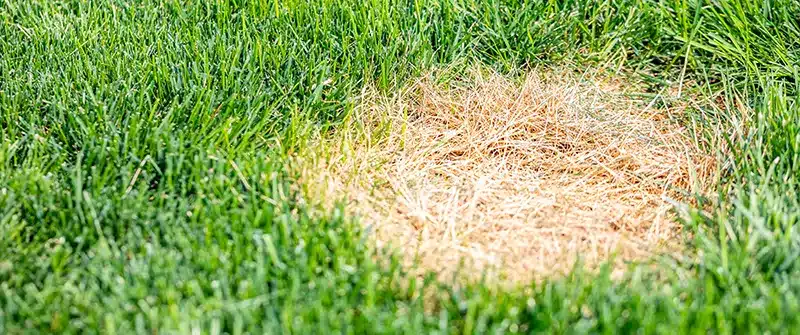
During metro Atlanta’s warm, wet or humid weather, we will be on alert for signs of fungus. Grass usually turns light brown to straw-colored in circular areas and can spread to irregular patches sometimes up to several feet across. Executive Turf Care offers lawn fungicide applications for many different diseases that occur in Bermuda, Zoysia, and Fescue.
Dollar Spot
Bermuda and Zoysia lawns are susceptible to Dollar Spot early to late summer. Dollar Spot appears as white or tan spots of dead turf about the size of a silver dollar. Hence the name Dollar Spot. If it is left untreated the spots may run together, producing large areas of dead turf. Affected leaves initially show yellow-green blotches, which progress to a light straw color with reddish-brown margins. Occasionally during the morning, you may notice cobweb-like mycelium covering affected leaves on dew-covered grass. If you notice this disease in your turf, please call our office so we can schedule a fungicide treatment.

Zoysia Patch & Spring Dead Spot
Zoysia Patch is recognized by the large circular areas in the Zoysia. This disease is most prominent in the spring at green up and in the fall before the turf goes dormant. Some of the contributing factors are compact soil, excessive thatch buildup and unseasonably warm temperature during the winter months. Lawns that have a history of this disease should be treated every spring and fall for best results. Please contact Executive Turf Care for more information or to schedule a fungicide treatment.
Spring dead spot disease is specific to Bermuda grass that is weak or under stress from physical, agronomic or climatic factors. Three species of Ophioshaerella (narmari, herpotricha and korrae) cause spring dead spot. The disease will establish itself inside the plant’s root system which will cause the plant’s vascular tissue to clog and therefore will prevent normal flow of water and nutrients. Spring dead spot (SDS) is one of the worst diseases we can face while growing bermuda grass in the transition zone. Injury symptoms appear during turf green-up in the April-May period even though spring dead spot fungus may be colonized in the plant when soil temperatures drop in late summer, fall and sometimes winter.
The first step toward spring dead spot management is to evaluate the health of the soil. Core aeration is needed to relieve soil compaction and will improve overall quality of turf. Preventative fungicide applications on an annual basis for several years are used to manage Spring Dead Spot. SDS control is a multi-year venture. You will not achieve 100% control in the first year but the level of disease will gradually decrease over a period of years. Use a combination of proper cultural practices and preventative fungicide applications to control this disease. Please call our office to get on our fungicide schedule.

Brown Patch in Fescue
As the name implies, brown patch appears as roughly circular patches that are brown, tan, or yellow in color, ranging from six inches to several feet in diameter. The affected leaves typically remain upright, and lesions are evident on the leaves. Their color is tan and their shape is irregular in shape with dark brown borders. Almost every fescue lawn in metro Atlanta will get brown patch during the summer months.
Warms nights combined with long periods of leaf wetness from afternoon or evening rainfall, irrigation, or dew are ideal for disease development. Executive Turf Care has a fungicide program that helps control the pathogens that cause Brown Patch. The program starts in May and runs through August. Please call our office to get on our fungicide schedule.